
Top 5 Loan Options for Students in the USA
Getting a college degree in the USA is expensive. Many students need help paying for tuition, books, housing, and other expenses. Student loans can be a smart way to finance your education, but it’s important to choose the right loan option.
In this article, we’ll explore the Top 5 Loan Options for Students in the USA. We’ll explain how each one works, the benefits, and how you can apply. We’ll also answer common questions about student loans to help you make the best decision for your future.
Why Student Loans Are Important
Student loans give students access to money they need for college. Without loans, many students would not be able to attend school. Loans can cover costs like:
-
Tuition and fees
-
Room and board
-
Books and supplies
-
Transportation
-
Other personal expenses
However, not all loans are the same. Some loans have lower interest rates, better repayment options, and more protection if you face financial difficulties. That’s why picking the right student loan is important.
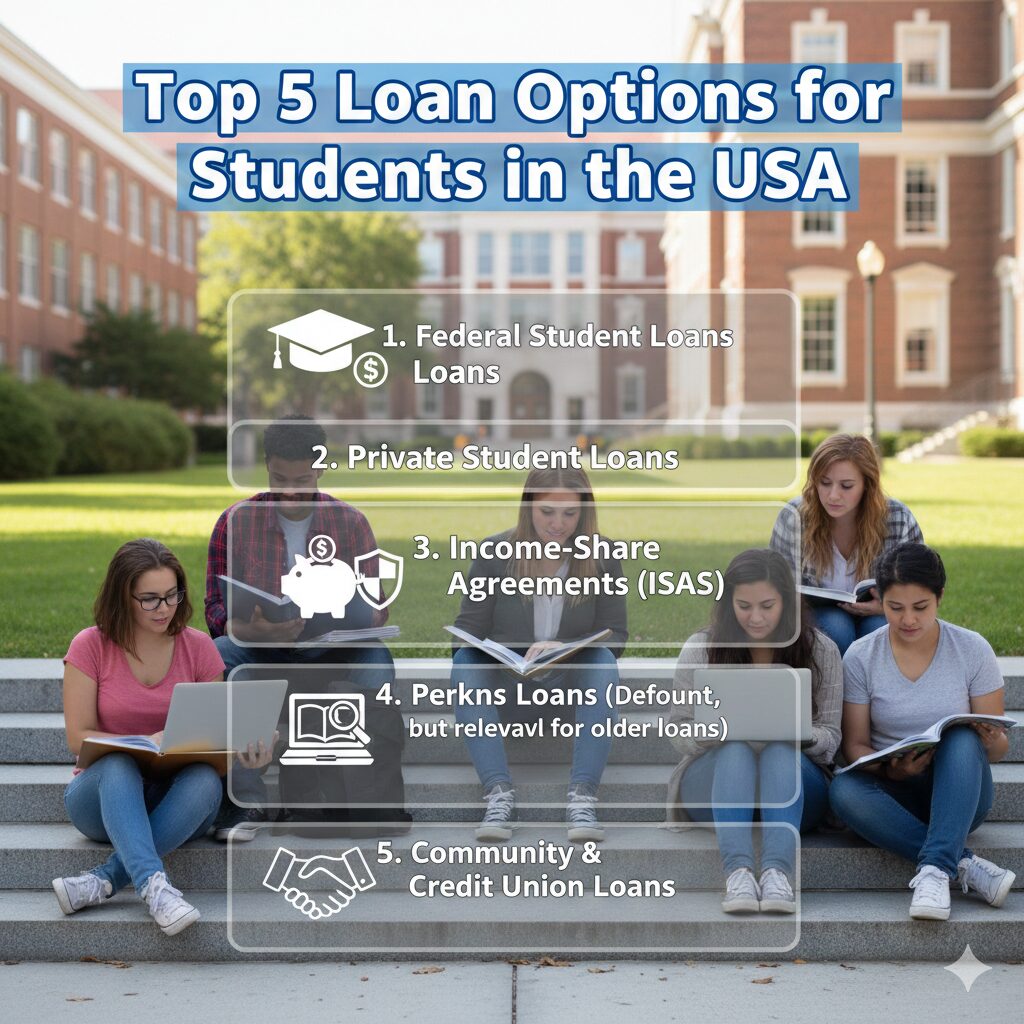
Top 5 Loan Options for Students in the USA
1. Federal Direct Subsidized Loans
What it is:
A Federal Direct Subsidized Loan is a government-backed loan for undergraduate students who show financial need.
Benefits:
-
The U.S. Department of Education pays the interest while you are in school at least half-time.
-
Lower fixed interest rates compared to private loans.
-
Flexible repayment plans, including income-driven options.
How to apply:
Complete the Free Application for Federal Student Aid (FAFSA).
Who should consider it:
Students with financial need who want low-interest loans without worrying about interest during school.
2. Federal Direct Unsubsidized Loans
What it is:
Federal Direct Unsubsidized Loans are available to undergraduate, graduate, and professional students, regardless of financial need.
Benefits:
-
Available to a wider range of students.
-
Fixed interest rates set by the federal government.
-
Access to flexible repayment and forgiveness programs.
How to apply:
Complete the FAFSA.
Who should consider it:
Students who may not qualify for need-based aid but still need financial help for school.
3. Federal Direct PLUS Loans
What it is:
Direct PLUS Loans are available for graduate or professional students, and for parents of dependent undergraduate students (Parent PLUS Loans).
Benefits:
-
Borrow up to the full cost of attendance (minus other aid).
-
Fixed interest rates.
-
Deferment options while in school.
How to apply:
Parents or graduate students must apply separately through StudentAid.gov. FAFSA completion is required first.
Who should consider it:
Graduate students or parents who need to borrow larger amounts to cover college costs.
4. Private Student Loans
What it is:
Private student loans are offered by banks, credit unions, and online lenders. They are not funded by the government.
Benefits:
-
Available if federal loans don’t cover all your costs.
-
Some lenders offer competitive rates for borrowers with good credit.
-
Options to choose fixed or variable interest rates.
How to apply:
Apply directly through a lender like Sallie Mae, College Ave, or your local bank.
Who should consider it:
Students or parents who have excellent credit or a cosigner and need more money after using federal loans.
5. State-Based or Nonprofit Student Loans
What it is:
Some states and nonprofit organizations offer special student loans with lower rates or borrower benefits.
Benefits:
-
Competitive interest rates.
-
Loan forgiveness or repayment help for students who work in certain fields.
-
Loans tailored to local students.
How to apply:
Check your state’s higher education website or search for nonprofit lenders like Rhode Island Student Loan Authority (RISLA).
Who should consider it:
Students looking for lower-cost alternatives to private loans who meet state residency or other eligibility requirements.
Tips for Choosing the Right Student Loan
-
Always use federal loans first before private loans. Federal loans offer better protections and benefits.
-
Compare interest rates and fees carefully.
-
Look at repayment terms. Some loans offer flexible repayment plans that adjust based on your income.
-
Check for forgiveness programs. Federal loans may offer forgiveness if you work in public service or nonprofit jobs.
-
Borrow only what you need. Remember, loans must be repaid, with interest.
How to Apply for Student Loans
1. Complete the FAFSA
The FAFSA opens the door to federal loans, grants, and work-study programs. It’s free to fill out at StudentAid.gov.
2. Review Your Financial Aid Offer
Your college will send you a financial aid letter showing how much aid you qualify for, including loans.
3. Accept Federal Loans First
Accept subsidized loans first, then unsubsidized loans if needed.
4. Apply for Private Loans If Necessary
If you still need more money, shop around for private loans. Use tools like Credible to compare rates.
FAQs About Student Loans
1. What’s the difference between subsidized and unsubsidized loans?
Subsidized loans don’t charge interest while you’re in school. Unsubsidized loans start charging interest right away.
2. Do I need a cosigner for student loans?
Federal loans don’t need a cosigner. Private loans often require one unless you have good credit.
3. When do I start repaying student loans?
Most federal loans offer a six-month grace period after graduation before payments begin. Private loans vary.
4. Can student loans be forgiven?
Yes. Programs like Public Service Loan Forgiveness (PSLF) can forgive federal loans if you work in qualifying jobs.
5. How much should I borrow for college?
Only borrow what you absolutely need. Try to keep total student loan debt below your expected first-year salary after graduation.
6. Are private student loans a good idea?
Private loans can help fill funding gaps but usually have fewer protections than federal loans.
7. Can international students get loans in the USA?
Federal loans are only for U.S. citizens and eligible non-citizens. International students may need a U.S. cosigner for private loans.
8. How do I know if my loan is federal or private?
Check your loan documents or log in at StudentAid.gov to view federal loans. Private loans will be listed with your lender.
Conclusion
Choosing the right loan is a big decision. With the Top 5 Loan Options for Students in the USA, you have many great choices to finance your education.
Federal loans should be your first stop because of their low interest rates, flexible repayment options, and borrower protections. Private loans and state-based loans are good options if you need additional funding.
Start by filling out the FAFSA early and talking to your school’s financial aid office. The right loan can make your college dreams a reality without unnecessary financial stress.